

facilitating difficult conversations in dei workshops
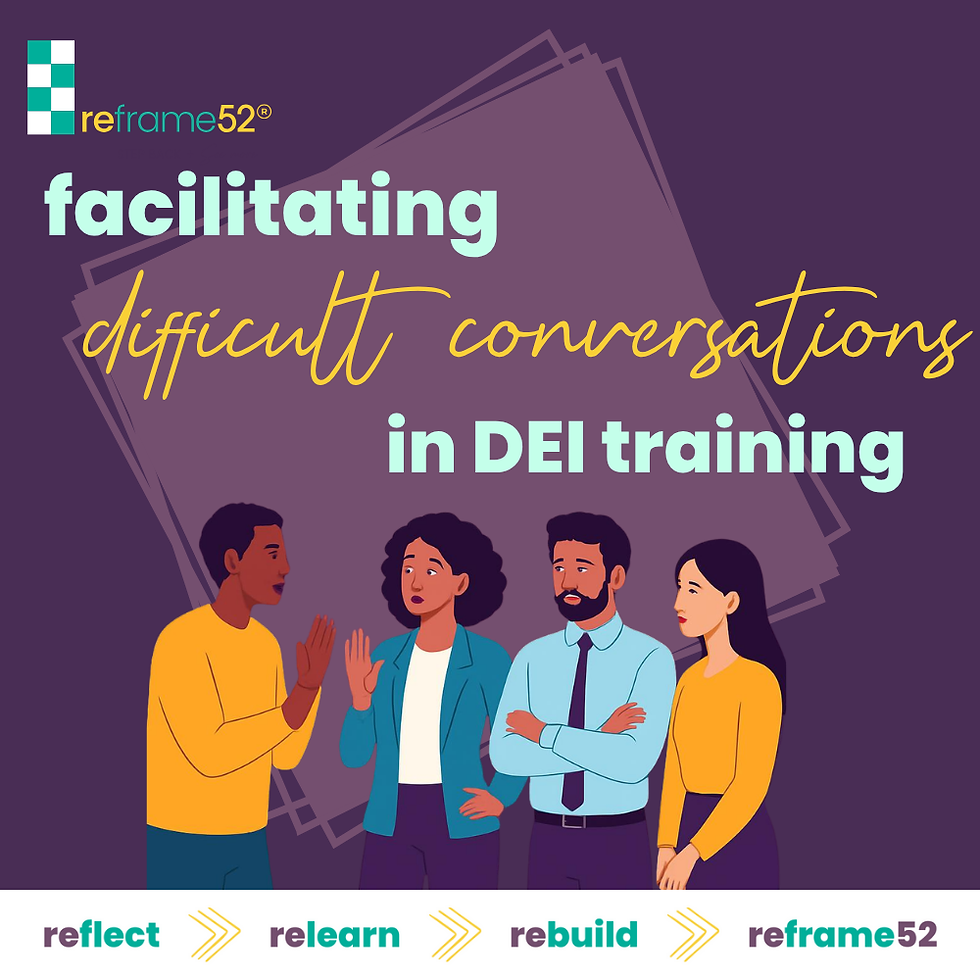
Many diversity, equity, and inclusion (DEI) workshops are designed to help participants better understand identity, bias, power dynamics, and others' experiences. These topics often intersect with personal experiences, workplace dynamics, and broader social systems. Because of this, meaningful DEI learning often involves emotionally complex or personally sensitive conversations.
For many leaders, HR professionals, and facilitators, guiding these discussions can feel intimidating. Emphasizing their skills and potential can help them feel confident and capable in navigating strong emotions, responding to disagreement, or keeping conversations productive when tensions rise.
As a result, organizations sometimes avoid difficult conversations altogether. Yet avoiding these discussions can slow progress and limit the impact of DEI initiatives. When challenging topics go unaddressed, misunderstandings persist, and learning opportunities are missed.
Skilled facilitation helps create a different outcome. With the right structure and tools, facilitators can help participants move through discomfort and toward deeper understanding. Difficult conversations become opportunities to explore different perspectives, reflect on assumptions, and strengthen communication across teams.
It is also important to clarify the purpose of these conversations to help facilitators emphasize that the goal of DEI dialogue is not to force agreement or persuade participants to adopt identical viewpoints. Instead, the objective is to increase awareness, encourage thoughtful reflection, and create space for constructive dialogue.
The following sections explore practical strategies facilitators can use to guide challenging conversations effectively, including:
why difficult conversations matter in DEI work
how facilitators create psychological safety
techniques for managing tension and resistance
strategies for guiding conversations toward learning and action
table of contents
why difficult conversations are essential to dei learning
DEI workshops often involve topics that can be challenging to discuss openly. Conversations about bias, privilege, discrimination, and identity are closely tied to personal experiences and societal systems. Because these issues affect individuals differently, participants may bring a wide range of perspectives and emotions into the conversation.
While this can create discomfort, acknowledging resistance and the difficulty of the process can help facilitators feel prepared and resilient, reinforcing that these challenges are part of meaningful learning.
Avoiding difficult discussions may keep conversations surface-level, but it can prevent organizations from addressing the realities that influence workplace culture. Without honest dialogue, teams may struggle to understand one another’s experiences or recognize barriers that affect inclusion and belonging.
Effective DEI conversations allow participants to:
explore perspectives different from their own
reflect on personal assumptions or blind spots
develop empathy for colleagues’ experiences
better understand how workplace systems affect individuals differently
When facilitated thoughtfully, these discussions shift from confrontation to exploration. Participants learn to approach differences with curiosity rather than defensiveness.
Research on workplace inclusion also suggests that open dialogue contributes to stronger collaboration and trust across teams. Organizations that create space for honest conversations are better positioned to build inclusive cultures where employees feel respected and heard.
creating psychological safety in workshops
Psychological safety is one of the most important foundations for productive dialogue because it directly supports open communication. In workshop settings, participants must feel that they can share questions, perspectives, and experiences without fear of embarrassment or retaliation.
Research on psychological safety from Harvard Business School highlights that people are more likely to speak openly and contribute ideas when they feel safe taking interpersonal risks. In other words, when participants trust that they will be treated respectfully, they are more willing to engage in meaningful discussion.
Facilitators play a key role in creating this environment, and emphasizing their impact can help them feel responsible and motivated to foster trust and openness in the group.
Psychological safety begins with clearly explaining the purpose of the conversation. Participants should understand that the workshop is designed for learning and exploration rather than debate or judgment.
Facilitators can support psychological safety by:
clearly outlining the goals of the discussion
acknowledging that discomfort is a normal part of learning
encouraging respectful curiosity rather than quick conclusions
reminding participants that everyone is still learning
Modeling behavior is equally important. Facilitators who demonstrate active listening, openness, and humility set the tone for the group.
When leaders acknowledge that they are also learning, participants are more likely to engage thoughtfully and share their perspectives.
Large-scale workplace studies reinforce the importance of this environment. For example, Google’s research on effective teams found that psychological safety is the most important factor influencing successful team collaboration.
A supportive environment does not mean conversations will always be easy. Instead, it allows individuals to explore complex topics without shutting down or becoming defensive.
setting ground rules and community agreements
Clear discussion guidelines, such as community agreements, help create a shared framework for respectful dialogue and foster a sense of collective responsibility. Many facilitators introduce these agreements at the beginning of a workshop to establish expectations for participation and manage tension effectively.
Community agreements function as a collective commitment to how participants will interact with one another during the conversation.
Common agreements include:
listening actively while others speak
speaking from personal experience rather than making broad generalizations
asking questions with curiosity rather than criticism
remaining open to perspectives different from one’s own
These guidelines help shift the focus from debate to dialogue. Participants are encouraged to understand one another’s perspectives rather than simply defend their own.
Facilitators should introduce these agreements at the start of the session and invite participants to contribute their own suggestions. This collaborative process can strengthen participants’ sense of ownership and shared responsibility for maintaining a respectful environment.
Community agreements also serve as a helpful reference point when conversations become tense.
For example, a facilitator might say:
“Let’s pause and return to our agreement about listening fully before responding.”
“I’d like to bring us back to our guideline about speaking from personal experience.”
These reminders help keep the discussion focused on learning rather than personal conflict.
facilitation techniques for navigating tension
Even with strong preparation, moments of tension are common in DEI conversations. Facilitators can rely on structured techniques that keep discussions productive while allowing participants to express their perspectives.
One effective strategy is asking open-ended questions. These questions encourage reflection and exploration rather than defensive responses.
Examples include:
“What experiences have shaped how you see this issue?”
“What perspectives might we be missing here?”
“How might someone with a different background interpret this situation?”
Another helpful technique is reframing statements. Facilitators can restate comments in a neutral, clarifying way to reduce misunderstandings and keep the conversation focused on ideas rather than individuals.
Active listening is also an important facilitation skill. Research highlighted in Harvard Business Review’s work on psychological safety shows that listening carefully and acknowledging different perspectives can strengthen trust within teams.
Facilitators may encourage participants to summarize what they heard before responding. This practice helps participants engage more thoughtfully and reduces the likelihood of people talking past one another.
When emotions run high, it may also be useful to pause the conversation. Reflection moments—such as journaling prompts or small-group discussions—give participants time to process information before continuing the discussion.
Research from the Program on Negotiation at Harvard Law School highlights that effective conflict resolution depends on understanding different perspectives and managing emotions rather than trying to “win” an argument. In DEI workshops, this approach helps shift conversations away from defensiveness and toward shared understanding and meaningful dialogue.
These techniques help facilitators maintain a calm, constructive environment even when conversations become emotionally charged.
responding to resistance and emotional reactions
Resistance is a common part of DEI conversations. Participants may express skepticism about DEI initiatives, question the relevance of certain topics, or react defensively when discussing privilege or bias.
Emotional responses may also emerge as individuals reflect on their own experiences or encounter new perspectives.
Rather than seeing resistance as a failure, facilitators can view it as a natural part of the learning process. When participants challenge ideas or express discomfort, they are often grappling with unfamiliar concepts.
Effective facilitators acknowledge these reactions without escalating conflict.
Simple responses such as “I hear that this topic raises strong feelings” can help participants feel recognized while keeping the conversation focused.
Facilitators can also redirect conversations toward shared goals by asking questions such as:
“What kind of workplace culture do we want to create together?”
“How can we ensure that everyone feels respected and included?”
Encouraging curiosity instead of debate helps participants explore ideas more thoughtfully.
At the same time, facilitators must distinguish between productive disagreement and harmful behavior. Comments that become disrespectful or exclusionary require clear intervention.
Reinforcing community agreements and restating expectations helps maintain a respectful environment while allowing meaningful discussion to continue.
guiding conversations toward learning and action
While conversation is valuable, the ultimate purpose of DEI dialogue is learning that leads to meaningful change. Facilitators can help participants translate discussion into action by encouraging reflection on what they have learned. Research from Harvard Business School shows that taking time to reflect on experiences improves learning and job performance, reinforcing the importance of structured reflection in turning insights into action.
Reflection prompts might include: “What insight from today’s conversation stands out to you?” “How might this discussion influence how you work with others?” “What is one action you can take to support a more inclusive environment?”
These questions help participants connect workshop insights to everyday workplace behavior. Facilitators can also guide teams in identifying practical next steps. These actions may involve improving communication practices, revisiting policies, or strengthening support systems for employees.
Linking discussions to organizational values can also increase relevance. When participants see how DEI learning connects to collaboration, innovation, and employee well-being, conversations feel more meaningful.
Effective workshops often conclude with both individual reflection and collective commitments, helping participants move from awareness to action.
how reframe52 supports difficult dialogue in workshops
Organizations often benefit from partnering with experienced facilitators who specialize in guiding complex conversations.
reframe52 supports organizations through thoughtfully designed learning experiences that help teams explore challenging topics constructively.
These offerings include:
facilitated equity workshops
leadership dialogue sessions
guided group discussions on topics such as power, bias, and inclusion
interactive learning experiences that combine reflection with dialogue
Programs such as Graze & Grow™ sessions create structured environments where participants can engage honestly with complex issues while maintaining psychological safety.
Through guided facilitation and reflective discussion, these sessions help organizations strengthen communication skills and build more inclusive workplace cultures.
conclusion
Difficult conversations are an essential part of meaningful DEI work. When facilitated with care and intention, these discussions can deepen understanding, strengthen relationships, and inspire meaningful change within organizations.
By prioritizing psychological safety, structured dialogue, and thoughtful facilitation techniques, leaders can create environments where employees feel comfortable engaging with complex issues.
Organizations interested in strengthening dialogue skills and building more inclusive workplace cultures can explore reframe52’s facilitated workshops and leadership learning programs designed to support meaningful conversations.
references
Delizonna, L. (2017, August 24). High-performing teams need psychological safety: Here’s how to create it. Harvard Business Review. https://hbr.org/2017/08/high-performing-teams-need-psychological-safety-heres-how-to-create-it
Google. (n.d.). The five dynamics of effective teams. Think with Google.https://business.google.com/us/think/future-of-marketing/five-dynamics-effective-team/
Harvard Business School. (2023, June 14). Four steps to build the psychological safety that high-performing teams need today. Harvard Business School Working Knowledge. https://www.library.hbs.edu/working-knowledge/four-steps-to-build-the-psychological-safety-that-high-performing-teams-need-today
Harvard Business School. (2014, May 5). Reflecting on work improves job performance. Harvard Business School Working Knowledge. https://www.library.hbs.edu/working-knowledge/reflecting-on-work-improves-job-performance
Shonk, K. (2026, February 11). 5 conflict resolution strategies that actually work. Program on Negotiation at Harvard Law School. https://www.pon.harvard.edu/daily/conflict-resolution/conflict-resolution-strategies/


Comments